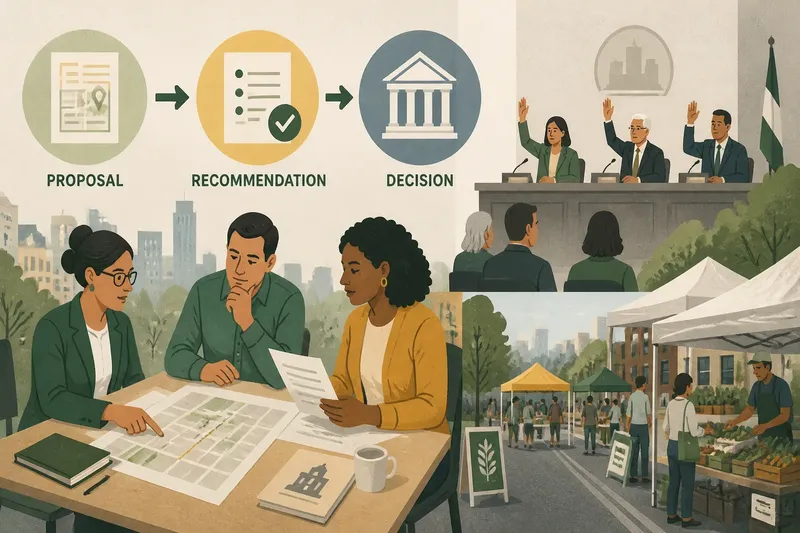
Rules, Services or Information? Comparing Three Policy Tools
Compare policy tools by tracing who must act, what support is offered, and what people are told, so you can spot gaps between a goal and its method.

A city proposal to reduce missed clinic appointments might require clinics to send reminders, offer a ride service, or explain how patients can reschedule. Those are distinct policy tools, and the difference matters: each changes a different part of the problem. To read a proposal clearly, trace who must act, what support becomes available, and what people are told.
Policy tools change different parts of a public problem
A policy tool is the mechanism an institution uses to pursue a public goal. The goal might be safer streets, cleaner water, or easier access to benefits. The mechanism identifies what the institution will change to move toward that goal.
A rule changes the duties or permissions that govern conduct. A service adds a resource or direct assistance. An information measure changes what people can learn and how they can use that knowledge. These mechanisms can overlap in one proposal, but they are not interchangeable: a notice cannot provide a ride, and a service does not automatically change an eligibility rule.
Read past a proposal’s title and locate its operative action. “Improve access” describes an aim, not a mechanism. Requiring evening appointments changes a clinic’s duties; funding a shuttle adds a service; publishing booking instructions gives people information.
Rules define duties, permissions, and limits
Rules rely on obligations, permissions, or restrictions. A city might require landlords to install a safety feature, prohibit dumping in a protected area, or permit food carts in designated locations. In each case, the policy changes what a person or organization is expected or allowed to do.
To read a proposed rule, identify the actor, the required or permitted conduct, and the institution responsible for applying it. Then look for consequences of noncompliance and any process for exceptions or review. If the proposal does not say who is covered or what conduct is governed, readers may not be able to tell what compliance means.
Rules can also govern agencies and businesses. For example, a proposal may require an agency to publish eligibility criteria. Its subject is information, but its mechanism is a duty imposed on the agency. Follow the operative verb and the actor it governs.
Circle words such as “must,” “may,” and “prohibited,” then connect each one to a person or institution.
Services add capacity people can use
A service supplies a resource or activity directly. Public transit, language classes at a library, an application-assistance desk, and trash collection all involve an institution delivering something people can use. The proposal is not only instructing people; it is adding a practical option or support.
Delivery details reveal who can benefit and what barriers remain. Check the intended users, location, hours, enrollment requirements, and available language, mobility, or technology support. A service can be well described in principle yet inaccessible to someone who cannot reach its location or complete its intake process.
Say a fictional county proposes help with housing-benefit applications. It requires property managers to distribute a notice, publishes a guide explaining the application, and staffs a desk where residents can review forms with a trained worker. The notice creates a duty, the guide supplies information, and the desk provides a service. If the desk is only available in person during working hours, the county has added direct help but left a practical access barrier; the proposal’s design would need to address that gap if the intended users cannot attend.
Vague language such as “expand support” leaves the actual service uncertain. Look for the named activity, its users, and the institution expected to deliver it.
Information supports decisions without supplying every resource
Information measures aim to affect decisions by making facts, instructions, or risks easier to understand. A notice about boil-water precautions, a permit application guide, or a road-closure map can help people decide what to do.
Ask what is being communicated, who is meant to receive it, and what action the message is intended to support. Then consider the channel. A web page may be difficult to use for someone without reliable internet access; a technical guide may be hard to understand; an untranslated notice may not reach its intended audience. Printed material, translation, or in-person explanation may address some of those limits.
Information alone does not remove every obstacle. Explaining how to apply for a benefit may clarify the process, but it does not provide transportation to an office or change an application requirement. Compare the information offered with the barrier the proposal names.
How can you distinguish tools and assess a combined proposal?
Can one proposal use all three tools?
Yes. A city could require restaurants to post allergen notices, offer translation support to small businesses, and publish guidance for diners. The posting duty, practical support, and public guidance are different mechanisms serving a related aim.
How can you tell a rule from a service?
Ask whether the proposal creates a duty or makes direct assistance available. Requiring an agency to answer benefit questions establishes an obligation; staffing a desk where residents can ask those questions provides a service.
Does a public notice count as a policy tool?
It can, if the proposal uses communication to affect understanding or action. A notice that only records an event may be administrative, so consider its purpose and the change it is meant to encourage.
What can you do when a proposal’s mechanism is unclear?
Identify the actor, the action, and the people affected. If the proposal does not specify them, it may state a goal without making clear how the institution intends to pursue it.
Check whether the mechanism addresses the stated barrier
A proposal’s goal and its policy tool answer different questions. The goal names the outcome officials seek; the tool shows how they intend to influence events. Comparing the mechanism with the barrier can reveal a mismatch: information may not solve a lack of access, while a new rule may not supply a service people need.
- Check whether a rule names the person or organization it governs; if it does, identify that actor and the duty, but if it does not, seek clarification before judging who must comply.
- Check whether the required conduct is specific; if it is, assess whether the proposal explains how compliance will be handled, but if it is vague, ask for a clearer description of the obligation.
- Check whether a service names its users; if it does, compare its access conditions with their likely needs, but if it does not, ask whom the service is intended to reach.
- Check whether delivery details such as location, hours, and enrollment are stated; if they fit the intended users, consider the service accessible on those terms, but if they create barriers, ask what other access route is available.
- Check whether an information measure identifies its audience and purpose; if both are clear, compare the message with the action it is meant to support, but if either is missing, request a more precise communication plan.
- Check whether the proposed mechanism matches the stated barrier; if it does, assess whether the proposal also accounts for remaining obstacles, but if it does not, identify the missing tool or ask officials to explain the mismatch.
For a fully worked fictional example, imagine a clinic proposal aimed at patients who miss appointments because they cannot get to the building. Its starting inputs are a stated transportation barrier, a requirement that clinics send appointment reminders, and no ride service or travel information. First, identify the goal as reducing missed appointments. Next, classify the reminder requirement as a rule governing clinics; it may help patients remember, but it does not address the stated travel barrier. Then compare the available options: adding a ride service would supply transportation, while a notice listing nearby transit routes would offer information but would not provide a ride. The resulting judgment is that the reminder rule alone does not match the barrier; a service directly addresses it, while route information may help some patients but leaves the transportation constraint unresolved for others.
When you read a policy proposal, write its central actions as “requires,” “provides,” or “explains.” If more than one applies, separate the components and check each against the problem it is meant to address. This makes the proposal’s actual commitments easier to see and keeps attention on the gap between its stated goal and its chosen mechanism.