How Public Administration Became More Specialized
Public administration history explains how recurring government duties can move from individual officeholders to specialized organizations, and how to trace responsibility.
Public administration history is easiest to understand by following a recurring public task, such as maintaining a bridge, rather than assuming every government followed the same path. In many settings, public duties were assigned to people who combined several roles; elsewhere, arrangements differed according to local law, resources, and political authority. The distinction between a person holding office and an organization sustaining a task helps explain what administrative specialization changes.
Public duties can begin with a person who holds several roles
An officeholder is a person authorized to perform a public function. In arrangements where one person handles multiple duties, that official might collect revenue, report to a superior, and respond to local disputes. The exact combination depends on the place and period, so this is a way to analyze administration, not a universal historical sequence.
Consider an invented town called Alderford. Its local officer, Mara Vale, is responsible for collecting bridge tolls, reporting to a regional governor, and arranging repairs. These details are fictional and do not describe a historical town. They show how a single office can bundle authority and practical work.
That arrangement may let an official respond to local conditions using personal knowledge. But if instructions, money, and records all remain with one person, residents may have difficulty distinguishing an official duty from an individual’s choice. A successor may also have to reconstruct earlier decisions from scattered notes or recollections.
Records help a public task outlast its current officeholder
A written instruction, account, or report can preserve information beyond the tenure of the person who created it. Records may let a supervisor review a decision and help a successor understand what work remains. They do not automatically make administration fair or complete: a file can omit disagreements, reflect its author’s priorities, or be difficult for residents to access.
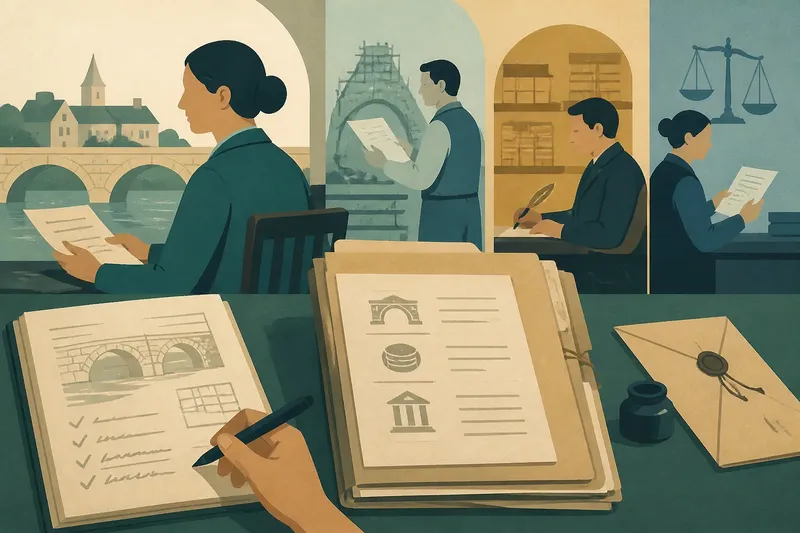
In the invented Alderford scenario, Vale records which bridge sections need attention, what toll receipts she has accounted for, and which repair requests remain unresolved. A later officer could use those notes to identify pending work rather than begin with no account of earlier decisions. The example illustrates a possible administrative function of records, not a claim about how any particular historical government operated.
To understand a public record, ask who created it, what task it documents, and who can consult it. Those questions help distinguish an official account from a complete account.
Specialized offices separate responsibilities and create boundaries
A specialized office is an organization assigned a continuing public function, such as maintaining infrastructure or keeping financial accounts. Assigning related work to an office can support expertise and routines that persist as staff change. It also means a task may depend on decisions made by more than one institution.
In the fictional Alderford scenario, a works office assesses the bridge, a treasury office handles authorized funds, and a legal authority considers disputes over tolls. The arrangement separates functions that Vale once carried together. It could make each office’s role easier to identify, but a repair might still wait while offices resolve who has authority to act or how resources may be used.
Specialization therefore changes the shape of accountability. A resident asking about a delay may need to identify which office assessed the problem, which one authorized spending, and which record explains the sequence. Divided responsibility can make oversight more specific, while making coordination harder to follow.
How can readers distinguish an agency from its officeholders?
What makes an agency different from an individual official?
An agency is an organization assigned public responsibilities, with staff and procedures that can continue as individual employees change. An official is a person occupying a role within that arrangement, though some public functions may be assigned directly to individuals rather than agencies.
Why do governments assign work to specialized offices?
Specialization can let an office build knowledge and routines around a continuing task. It can also create dependencies on other offices, such as a separate body responsible for funding or legal authority.
Does specialization remove personal judgment?
No. Officials still interpret instructions and apply authority to particular circumstances. Procedures and assigned roles may frame those decisions, but they do not eliminate judgment.
Did every government develop agencies in the same way?
No single timetable or sequence applies everywhere. Administrative arrangements vary with political institutions, legal traditions, resources, and the tasks a government undertakes.
Trace a public decision through its assigned roles
When a public service involves several offices, a reader can trace responsibility by checking concrete features of the available records and instructions:
- Check whether a written rule assigns the task to a named office; if it does, direct the question to that office, and if it does not, look for the law or order that establishes responsibility.
- Check whether the record identifies who assessed the problem; if it does, ask that office how it reached its assessment, and if it does not, request the assessment record or ask which body conducted it.
- Check whether an authorization names the official or office that approved the action; if it does, direct questions about authority there, and if it does not, look for the governing instruction before attributing the decision.
- Check whether the file records a funding decision; if it does, distinguish the funding approval from the office carrying out the work, and if it does not, ask which body controls the relevant funds.
- Check whether the record shows a handoff between offices; if it does, follow the handoff to the next responsible body, and if it does not, ask which office currently holds the matter.
- Check whether the decision cites a review or appeal route; if it does, use that route for a challenge, and if it does not, consult the relevant public office or a qualified professional when legal rights may be involved.
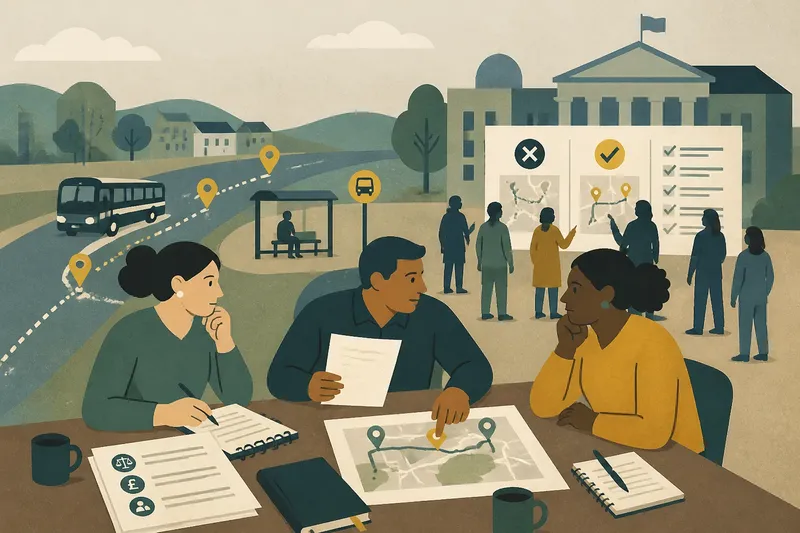
Say a resident of the invented Alderford asks why bridge repairs have not started. The resident has a fictional governor’s letter assigning the works office to assess the damage, a works report recommending repairs, and no funding approval in the file. First, the resident checks the letter and directs the technical question to the works office. Next, the resident checks the report and confirms that an assessment exists. Then, because the file contains no funding authorization, the resident asks the treasury office whether it has considered the request. The resulting answer is limited but useful: the works office assessed the bridge, while the available records do not establish that funding was approved. That distinction points to the next office to contact without treating the imagined scenario as evidence about a real government.
Institutional boundaries reveal how public authority works
Public administration history helps explain why a modern agency’s name is not enough to establish what it can do. The more useful questions concern the task assigned to it, the authority governing that task, the records it keeps, and its relationship with other offices. Those details show whether an issue belongs to one organization or depends on a chain of decisions.
When reading about a public service, follow the assigned work from assessment through authorization and action. Public administration history becomes more concrete when each office is connected to a specific duty and a record that can be checked.